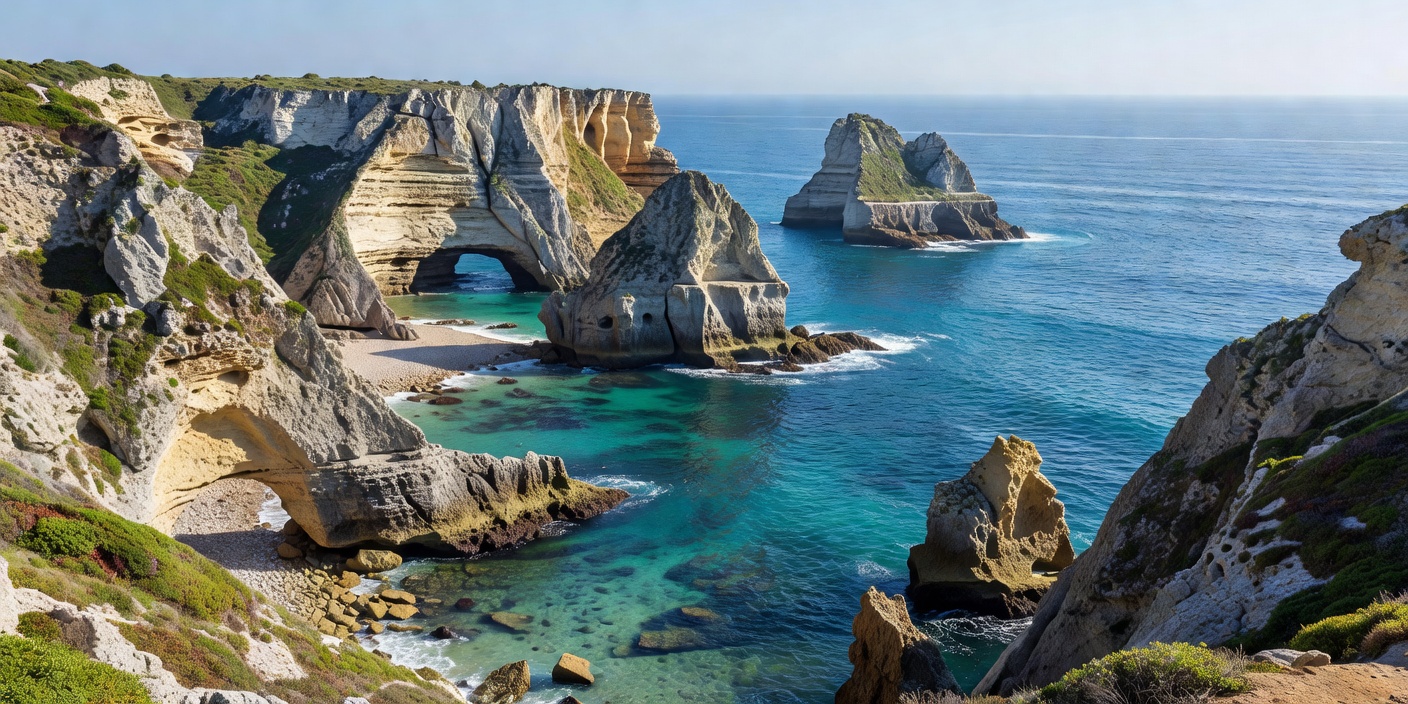
The Delicate Balance of Cliff Ecosystems
The calcarenite cliffs of Marinha may look immense and impenetrable, yet they constitute an inherently fragile dynamic landscape. Intense foot traffic on cliff edges accelerates topsoil loss and denudes specialized cliff plants such as sea lavender (Limonium spp.), Mediterranean juniper, and rock samphire that anchor the surface substrate.
When vegetative cover is stripped by shortcut paths, rain channels directly into vertical crevices, hastening catastrophic stone collapse. Following designated trails marked by the municipality is vital for both visitor safety and habitat preservation.
Strict Adherence to Cliff Hazard Zones
The Portuguese Environment Agency (Agência Portuguesa do Ambiente - APA) categorizes the cliff bases along Praia da Marinha as active rockfall zones. While resting in the shade of a hollow cliff overhang is tempting during mid-summer heat, rockfalls can happen without noise or tremors.
Responsible travelers should strictly position their beach seating beyond the yellow caution indicator lines and avoid touching or carving into the soft calcarenite rock walls. The extraction of fossil molds or loose limestone fragments is illegal under national heritage statutes.
"Preserving Praia da Marinha is not merely about taking litter home; it is an active discipline of staying on marked cliff tracks and allowing the natural erosion cycle to occur without human degradation."
Zero-Trace Beach Etiquette
With thousands of daily admirers during peak months, minor pieces of litter accumulate into major ecological threats. Microplastics and cigarette butts discarded in the sand are swept directly into the Atlantic by high tides, threatening marine vertebrates and seabirds that nest along the cliff ledges.
- Pack It In, Pack It Out: Always carry a dedicated rubbish bag. Clifftop disposal bins can overflow on busy afternoons; if bins are full, transport your waste back to your accommodation for sorted recycling.
- Reef-Safe Sunscreen: Traditional sunscreens contain chemical filters (such as oxybenzone and octinoxate) shown to impair marine larvae and algal ecosystems. Use mineral-based sun lotions utilizing zinc oxide or titanium dioxide.
- Wild Camping Prohibited: Pitching tents, sleeping in campervans, or building open campfires on the clifftop car parks or beach sands is strictly illegal under Portuguese decree law (Decreto-Lei n.º 102-B/2020). Municipal police enforce fines.
Protecting Marine Wildlife
Snorkelers and kayak adventurers must practice respectful observation when encountering marine organisms around the sea arches:
- Never handle common octopuses, sea cucumbers, or starfish. Handling dissolves their protective mucosal coating, leaving them vulnerable to pathogens.
- Avoid standing on submerged rocks covered in living algae and mussels. Use buoyancy control while snorkeling to hover above reef formations.
- Maintain an ethical distance from cliff-nesting birds such as the peregrine falcon, European shag, and pallid swift that raise chicks on narrow rock shelves between March and July.
Ethical Visitor Action Matrix
| Activity | Harmful Practice | Responsible Alternative |
|---|---|---|
| Trail Hiking | Walking on unfenced cliff margins | Remain firmly on the PR1 marked blazes |
| Beach Relaxation | Setting umbrellas directly beneath overhangs | Maintain minimum 15–20m buffer from cliffs |
| Snorkeling | Collecting shells and fossil rocks | Take photos only; leave marine materials in situ |
| Waste Management | Leaving organic fruit peels on sand | Carry all remnants to town recycling receptacles |