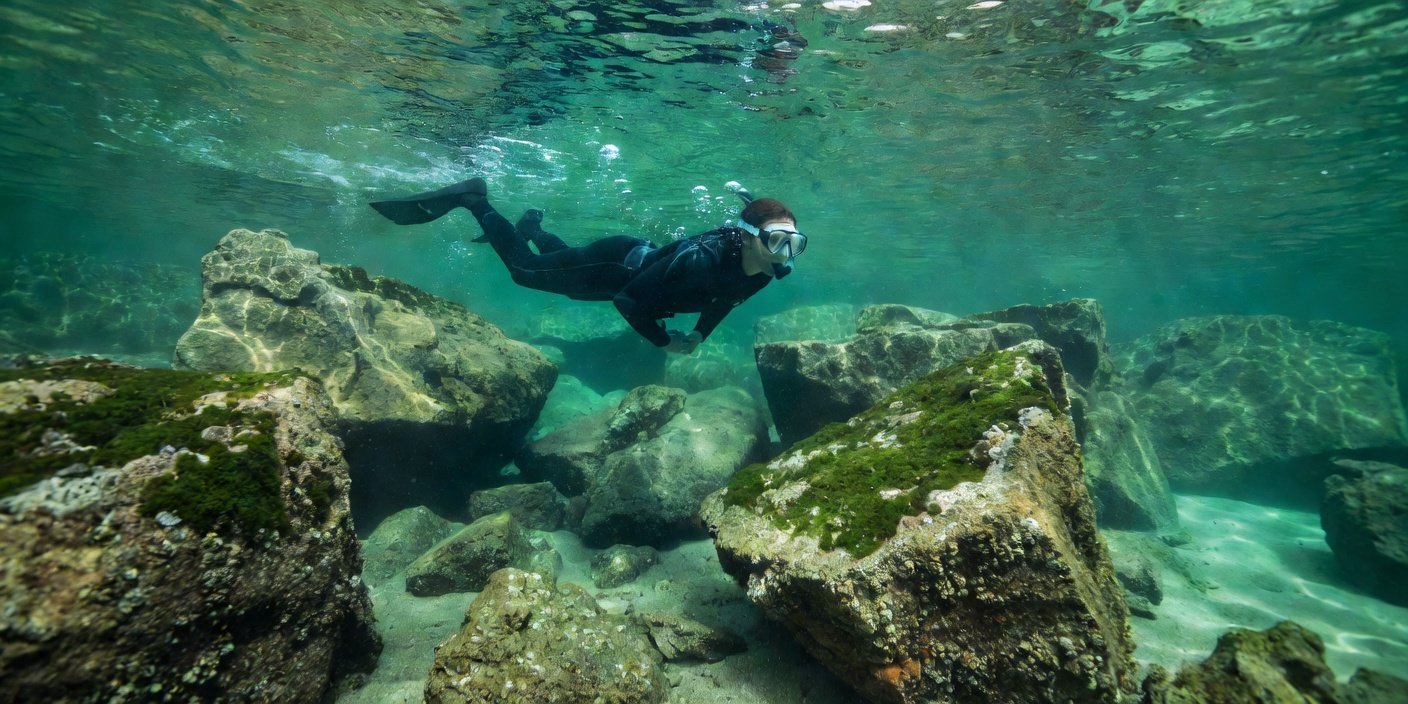
Why the Sea at Marinha Stays Calm
Unlike the wind-exposed surf beaches along the western Costa Vicentina, Praia da Marinha faces south-southeast. It is backed by a 30-meter continuous amphitheater of calcarenite rock. This high natural topography blocks the prevailing northerly trade winds (the Nortada) that frequently buffet mainland Portugal during the summer months.
Furthermore, a series of offshore rocky reefs and detached islets break the incoming Atlantic swell before it reaches the sand. Consequently, Visit Portugal describes Marinha as enjoying a calm sea condition throughout the regular bathing season, making it safe for swimming, stand-up paddleboarding, and snorkeling.
Water Clarity and Underwater Visibility
Because the beach is free of major river estuaries that deposit muddy sediment, underwater visibility at Marinha frequently reaches 8 to 15 meters during calm summer periods. The seabed consists of coarse, clean golden quartz-carbonate sand and submerged limestone boulders.
Optimal visibility occurs during neap tides on days when winds are light or offshore (northerly). In contrast, strong southerly winds (the Levante) can push low swells into the cove, temporarily stirring fine particulate matter along the surf line.
"The submerged bases of the sea stacks function as vertical oasis walls: sunlight penetrates clean coastal water, nourishing coralline algae, anemones, and dense shoals of sea bream."
Seasonal Sea Temperatures
While the Algarve sits on the Atlantic Ocean rather than the warm Mediterranean, sea surface temperatures along the southern coast are moderated by subtropical currents and Mediterranean outflow waters:
- May to June: 16°C – 18°C. Refreshing, crisp water requiring a light wetsuit or shorty for long snorkeling sessions.
- July to August: 19°C – 21°C. Comfortable for extended open swimming without thermal protection on sunny days.
- September to October: 20°C – 22°C. The ocean retains its peak thermal mass while air temperatures moderate slightly.
- November to April: 14°C – 16°C. Winter swells increase; swimming is limited to cold-water swimmers and divers with 5mm+ suits.
Snorkeling Habitats & Marine Biodiversity
The underwater topography around the sea arches creates diverse micro-habitats. Snorkelers starting from the western edge of the main beach can inspect the base of the natural stacks. Common marine organisms encountered include:
- Fish species: Two-banded sea bream (Diplodus vulgaris), white seabream (Diplodus sargus), salema porgy, wrasses (Coris julis), and Mediterranean damselfish.
- Benthic life: Common octopus (Octopus vulgaris) sheltering in limestone crevices, cuttlefish skimming sand channels, and spiny sea urchins.
- Flora & invertebrates: Encrusting coralline algae, beadlet anemones, and small sponges clinging to shaded cavern walls.
Tides and Swell Safety
The Algarve experiences semi-diurnal tides with two highs and two lows roughly every 24 hours. The tidal range at Marinha fluctuates between approximately 1.2 meters during neap tides and up to 3.5 meters during equinoctial spring tides.
At high tide, the dry sandy strip narrows considerably, especially in the eastern pocket beaches accessible through sea tunnels. Swimmers and sunbathers must plan their departure before rising water cuts off access around projecting rock noses.
Snorkeling Equipment & Guidelines Table
| Gear Item | Recommendation | Reasoning |
|---|---|---|
| Mask & Snorkel | Low-volume silicone mask | Enables wide peripheral view among rock crevices |
| Footwear / Fins | Short travel fins or water booties | Submerged limestone is sharp; prevents foot lacerations |
| Thermal Protection | 2mm rashguard or shorty | Provides UV reflection and insulation during 45+ min swims |
| Surface Marker Buoy | Highly advised near arches | Alerts small kayak and boat tour operators to your presence |